img-03
img-02
Decoding the Genetic Blueprints for Next-Generation Crop Improvement.

At the intersection of biology and data science lies the power to transform agriculture. At 2EM Plant Lab, our Molecular Genetics and Functional Genomics services provide the high-resolution insights needed to understand gene function, regulatory networks, and the genetic basis of complex traits like yield and stress tolerance.

From Sequence to Function

Modern crop improvement requires more than just knowing a DNA sequence; it requires understanding how that sequence translates into a physical trait. We utilize advanced molecular tools to help researchers and breeders bridge the gap between genotype and phenotype, enabling more precise selection and faster breeding cycles.
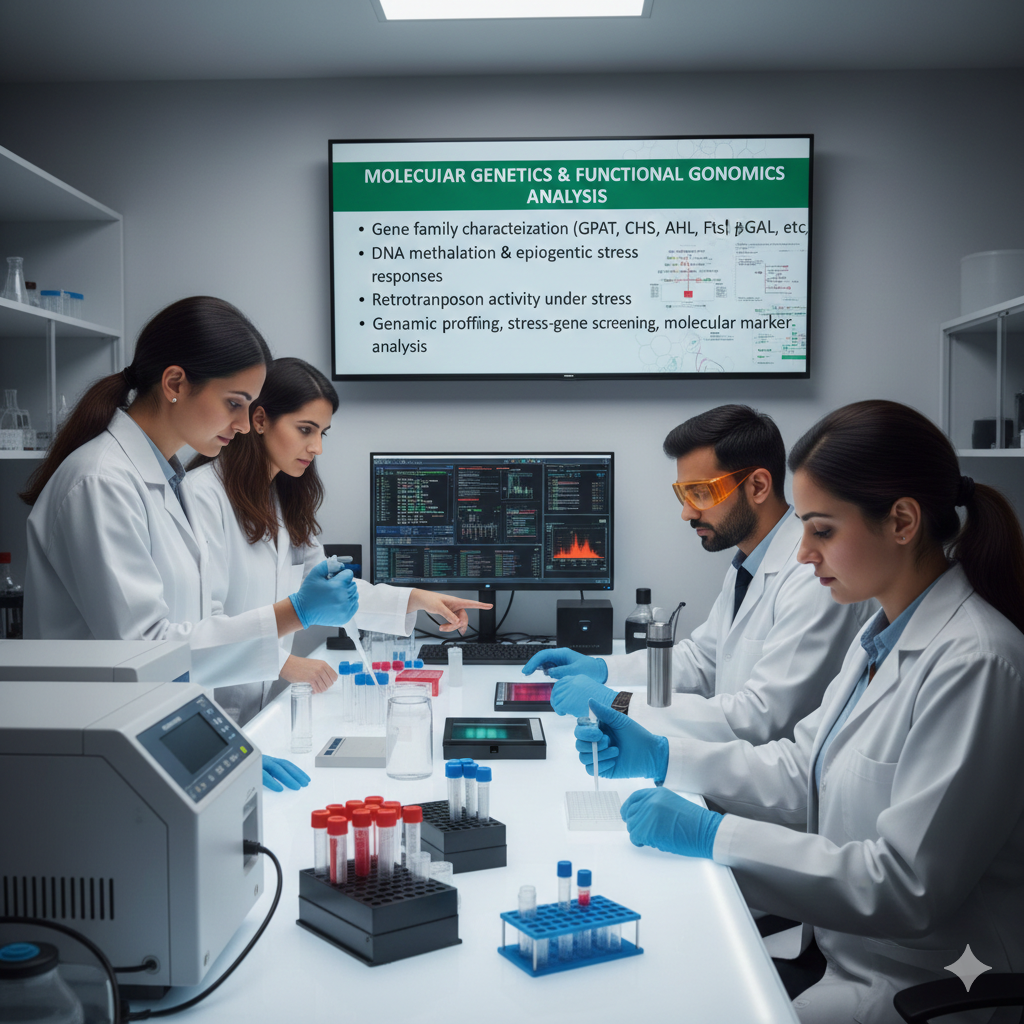

We offer specialized analytical workflows to support your genetic research:

  • Gene Expression Profiling (RT-qPCR): Accurate quantification of transcript levels to study plant responses to environmental stimuli or developmental cues.

  • Marker-Assisted Selection (MAS): Development and validation of molecular markers (SNPs, SSRs) to accelerate breeding for desired traits.

  • Functional Characterization: Investigating gene roles through overexpression, knockdown (RNAi), or localization studies.

  • Genomic DNA/RNA Services: High-purity extraction and quality assessment from diverse plant tissues, including recalcitrant horticultural species.

  • Genetic Diversity Analysis: Using molecular markers to assess genetic variation within populations or germplasm collections.

  • Epigenetic Analysis: Investigating DNA methylation patterns and their role in transgenerational stress memory.

  • Precision Breeding: Identify the specific genetic markers associated with drought resistance, salt tolerance, or disease immunity.

  • Variety Identification: Verify the genetic purity and identity of cultivars for intellectual property protection and quality control.

  • Target Discovery: Identify key candidate genes for further modification via traditional breeding or modern gene-editing technologies.

  • Regulatory Compliance: Provide molecular characterization data for the assessment of genetically modified or edited crops.

  • High-Throughput Capability: Streamlined workflows for processing large sample sets with consistency and speed.

  • Bioinformatics Integration: We don’t just provide raw data; we offer comprehensive bioinformatics support to interpret complex genomic results.

  • Horticultural Expertise: Specialization in the unique genetic challenges of horticultural crops, including polyploidy and high secondary metabolite interference.

More by admin